Sunday, 13 December 2015

The trasport in Constantine:

The buses :
There are 2 types of public transport by bus in the metropolitan area: public transportation, managed by The Constantine Transport Company (ETC), with modern buses and ensuring more timely service and a dense network of private buses , older, polluting and without fixed schedules.

The tramway :
A first section of 8.9 kilometers with 10 stations between stage Benabdelmalek Ramdane (city center) and Zouaghi city (south of the conurbation) was commissioned July 4, 2013.
At an estimated attendance at 70,000 daily users, this new mode of transport runs daily from 5 am to 23 pm with a frequency of three minutes in peak hours and five minutes in peak hours.
This first line will be supplemented by two additional sections made from the fork terminus Zouaghi. This is, firstly, a branch of 2.7 km to the Boudiaf airport and, secondly, of a section to the new city Mendjeli Ali.


A mutlimodale station covering an area of ​​10 hectares is under construction in Zouaghi.

The gondola Constantine:(The cable car)
Made necessary by the topography of the city, transport by cable cabins provides a solution to the gridlock.
A first line of a total length of 2.3 kilometers through the gorge of Wadi Rhummel to connect the eastern part of the city at the site Tatache Belkacem in the western part at the Emir Abdelkader city, passing by CHU Ben Badis. It is functional since 2010 and includes 33 detachable cabins with 15 seats each, connecting the two terminals in 8 minutes and carry 2,400 people per hour.
Constantine Airport - Mohamed Boudiaf :


 built in 1943 for the US Army, is an Algerian airport, located in the village of Constantine 9 km south of the city.

               The suspension bridge city  :

                             1. Kantara bridge door: the oldest bridges built by the Romans and then repaired the Turks in 1792 


     2. Bridge Sidi Rached: designed by the French architect Aubin Aero, and holds 27 bow, diameter of the largest of 70 m, with an estimated height B105m, a length of 447 m and width 12 o'clock, traffic by the year 1912 began, and is the highest and largest stone bridge in the word
Pont De Sidi Rached Bridge, Constantine, Eastern Algeria, Algeria, North Africa, Africa Photographic Print
    3. Bridge Sidi M'Cid: we built and designed by French engineer Ferdinand Ornodan in 1912 and is also called the bridge commentator, estimated B175m height and length of 168, the highest bridges of the city, and the highest in Africa.

 
     4.Bridge Melah Soleman is a corridor devoted to the railing on foot only, built between 1917 and 1925 and a length of 15 m and width of two meters and a half, linking the railway station and the city center street.                           


      5.Bridge Mjazn Ghanem: it is an extension of the street Rahmani Achour, due to the narrowness is unidirectional.
Devil's Bridge: a small bridge connects the two sides of the valley between the sand and is located at the bottom of the groove.


      6. Bridge"Chittan": there are on the road leading to the swimming pool and the water above the valley of sand beneath the bridge that pass composed Falls, and built in 1928.


       7.Constantine giant bridge:

The bridge Salah Bey is the eighth bridge of Constantine, the longest with 756 meters for the main viaduct 4.3 km, counting connections and access. Based on eight guys and peaking at 130 mètres1.It was inaugurated July 26, 2014 by Prime Minister Abdelmalek Sellal, baptized in the name of the governor of Salah Bey Constantine 1771-1792.The work performed by the Brazilian group Andrade Gutierrez 
Salah Bey viaduct is a motorway viaduct type connects the south of the old town to the south of Coudiat and north of the city from Mansoura plateau.


Saturday, 12 December 2015

Mosquées   :                                                                                                                                                                                                                                                                                                                   

  • Emir Abdelkader mosque: stone foundation of President Houari Boumediene develop and inaugurated by President Chadli Ben Jadid is one of the largest mosques in North Africa, it is characterized by its high minarets, which reaches an elevation of each 107 m high dome of 64 m, dazzle appearance Bength architectural magnificent and is one of the objects the esteemed human hand in the present era, though accomplished this design on the Levantine Andalusian style, was the fruit of cooperation between some of the engineers and technicians from the Egyptians and Moroccans, as well as the significant contribution of the engineers and technicians of Algerian workers, and expand the mosque for about 15 thousand worshipers, and point out that the Egyptian engineer, "Mustafa Musa "which is one of the Arabs is the senior engineers who designs the mosque and university.


    • Great Mosque: built in the state 503 years Zirid e 0.1136 m, was built on the ruins of the Roman temple object approach the Arab Benmehidi Currently, foreign engineered changed as a result of restoration, featuring Arabic writings inscribed on its walls.                                                                                                         
    • Collector market spinning: built-Bey is good and that was in 1143 e-1730m) French military leadership turned to the cathedral remained so until after he returned to his origin.                                                                                                             
    • Green Mosque Sir: was commissioned by the Bey Hassan bin Hussein, alias Abu Hanak in (1157-1743m) as evidenced by the inscription that is installed on a slab of marble above the entrance door, and there is next to the mosque cemetery includes several graves, including the grave of Hasan Bey.                                                                                                                                   
    • Collector sir flaxen: There Square "market age" currently, it is the son of Mustafa Salah Bey built in (1190 AH -1776) and next to him there Salah Bey family cemetery                                                                                                                            
    • Mosque Oval: There door Qantara neighborhood, built in the post-independence period, is punishable by senior scholars, including the city of Constantine Ataiwgay Sheikh and Sheikh Yusuf Boughaba preacher known, and there is next to the mosque of Imam Oval Institute of Forensic Sciences


                Palaces of Constantine:  

      Résultat de recherche d'images pour "palais ahmed bey"Résultat de recherche d'images pour "palais ahmed bey"
    •      Ahmed Bey Palace: The Palace of the Bey one of the major architectural antiques Constantine Creation of idea of "Ahmed Bey" which influenced during his visit to the holy art of Islamic architecture and wanted to translate his fascination parts this architecture built a palace, and has already started work in 1827, ending the year 1835. the palace covers an area of 5600 square meters, features and accuracy Batsall organization and distribution wings to the genius of architecture and taste together. Throughout its history been several attempts to change and adjustment, especially during the colonial period when I tried the French administration on the Europeanisation of the palace of Patmos Islamic monuments and decorative Alakecana (Ceramic).The architectural Riyadh palace was changed both on the Islamic origin after the French occupation of the city and became a mixture of architectural Riyazac, however, the original identity of the palace was the decoration and articles dyes and prevailing dominant on each of its parts and brilliant Vdhaouath, and the visit will take him Bnicohh and that refer to the reference architecture rooted in authenticity and foot. The old town gives the old city Pedrobha intimacy and their distinctive buildings, and strive covered Bouaputea and Islamic architecture in supporting a longer period, referring to the civilization and architectural refuses to go. The old town and is considered a moral and aesthetic heritage is a city full of cultural memory, social and cultural components. Constantine was known as other cities and capitals of Islamic niche markets, each market distinguished a particular trade or profession, and the markets of the city still retain these designations, such as butchers, blacksmiths, spinning market, and other. This with spaces that cover their homes and called Rahba, specializing especially like the wide and spacious beauty wool. As each district of the city markets, they were called peduncle, a small market, and still alive of the ancient city in the day called "stalk".                                                                       
    • Résultat de recherche d'images pour "‫إقامة صالح باي:‬‎"
      Establish Salah Bey : is the resort for rest, located 8 kilometers northwest of Constantine, it was by townhouses particular, the Salah Bey built for his family in the 18th century, to erect an elegant building amid landscaped gardens that adorned the slope until the valley of sand, and available accommodation the old dome is a pilgrimage destination for women to exercise some approximate ritual known as the "Bulletin".          
                                      

    And monuments:

    There are state of Constantine and the effects of several parameters such as:
    •   The tombs of prehistoricThe tombs of the people of the city of Constantine, a great deal of luxury, located mountain summit, Mr. M'Cid,    in a place called "dead set".     
    Other graves are located under the "bear cave" and on the other hand "Bugerh" as I discovered, as there are other cemeteries in "carob" sites called "retreat Sidi Bou stone" Qhqash, and adequate Tasingh Bbnoarh and go back to the whole pre-history.                               
    •   Cemetery Almigalitih to Bonowarh: within 32 km from Constantine, at the national road No. 20 leading toward the cemetery Almigalitih Valmh to Bonowarh on the southwestern slopes of Mount "removed" 2 km north of the village Bonowarh located .  
    These are made Atmanat "dolments" coherent layers of limestone dating back to the prehistoric age, and it seems that a large number of which has been damaged and extinction.
     It is noteworthy that the general model for these historical monuments in the form composed a table of four vertical rock blocks and a table, forming in turn, triangular room shape and usually   have Atmen surrounded by a circle of stones one, and sometimes two circles or three or four, and it was the region's population old use them to bury their dead in this fortified the way in which it sems to have lasted to the third century BC.


    •  Bears Cave: a length of 60 m and there are the rock of the North Constantine.
                          
    Résultat de recherche d'images pour "‫كهف الأروي‬‎"

    •   Bighorn CaveThere is near the Bears          cave with a length of 18:00 is both Alkhvin two industries archaeological dating back to the prehistoric period. 


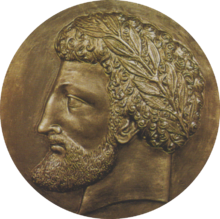
    •   The tomb of Massinissa :Massinissa and the Mausoleum of Elkherob: just 16 km south-eastof Constantine is located the tomb of Massinissa, which is a square tower, was built in the form of strips with three rows of stones, asculpture inspired by the method Alagriqi- way Punic have this shrineto Massinissa, who was born in 238 BC ratios. AD and died in 148BC, fever this area for 60 years and is credited with founding NumidianState, also contributed to the promotion of urbanization and the development of agriculture in the region and the foundations of a strong army.

    Massyle King Massinissa, who
    unified the kingdom of Numidia.
                                             

    • Ulius: Shrine to Ulius: Shrine of Ulius is located in Mountain Grill the place called "El Hary" a distance of about 25 kilometers northwest of Constantine, not far from the "Tides" has a cylindrical shape, built of hewn stone and built by "to Ulius Abrekes" ruler of Rome at that time in memory of his family.


  • Tiddis: Located 30 km north-west of Constantine and disappear in Mount deserted, was her old several names such as: "Constantine antique", "the head of the house," also called "Deathly City"  due to the large number of caves that had people worshiping them, and it seems that The current name "Tiddis" is the local name Nomide, The Romans Voattoha castelli respublica tidditanorum name.                                                                         And the meaning of "Castelli" is where the fortified, meaning "Rossbeblaka" with organizations enjoy any municipality, was the role of this city is to carry out the function of the advanced Serta castle to protect the city from foreign attacks.                                                                                                                          The effects of civilizations that came to "Tiddis" remains a witness to the day starting Basor history, Punic civilization, the Romanian civilization, Byzantine civilization to the Islamic civilization.


  • This is reflected prehistoric age in a group of tombs called "Dolmen" meaning "rocky tables," as well as the old cemetery located on the slope of the north side and gathered a number of ancient buildings, circular affected manner mass burials, called "Bazenas" shows the monument and evidence on the age Punic, The Roman character is reflected in the curriculum related to city planning system.


    Résultat de recherche d'images pour "‫باب سيرتا‬‎"


      • Bains tsar: toujours porté à la liste d'aujourd'hui, se trouvent dans la pente Valley sable, situé face à la gare, mais les inondations avaient détruit en 1957, cela a été les bains roumains attirent les familles et les ménages, douche Bmyaha chaudes et profiter du paysage qui les entoure, en particulier dans Printemps.